
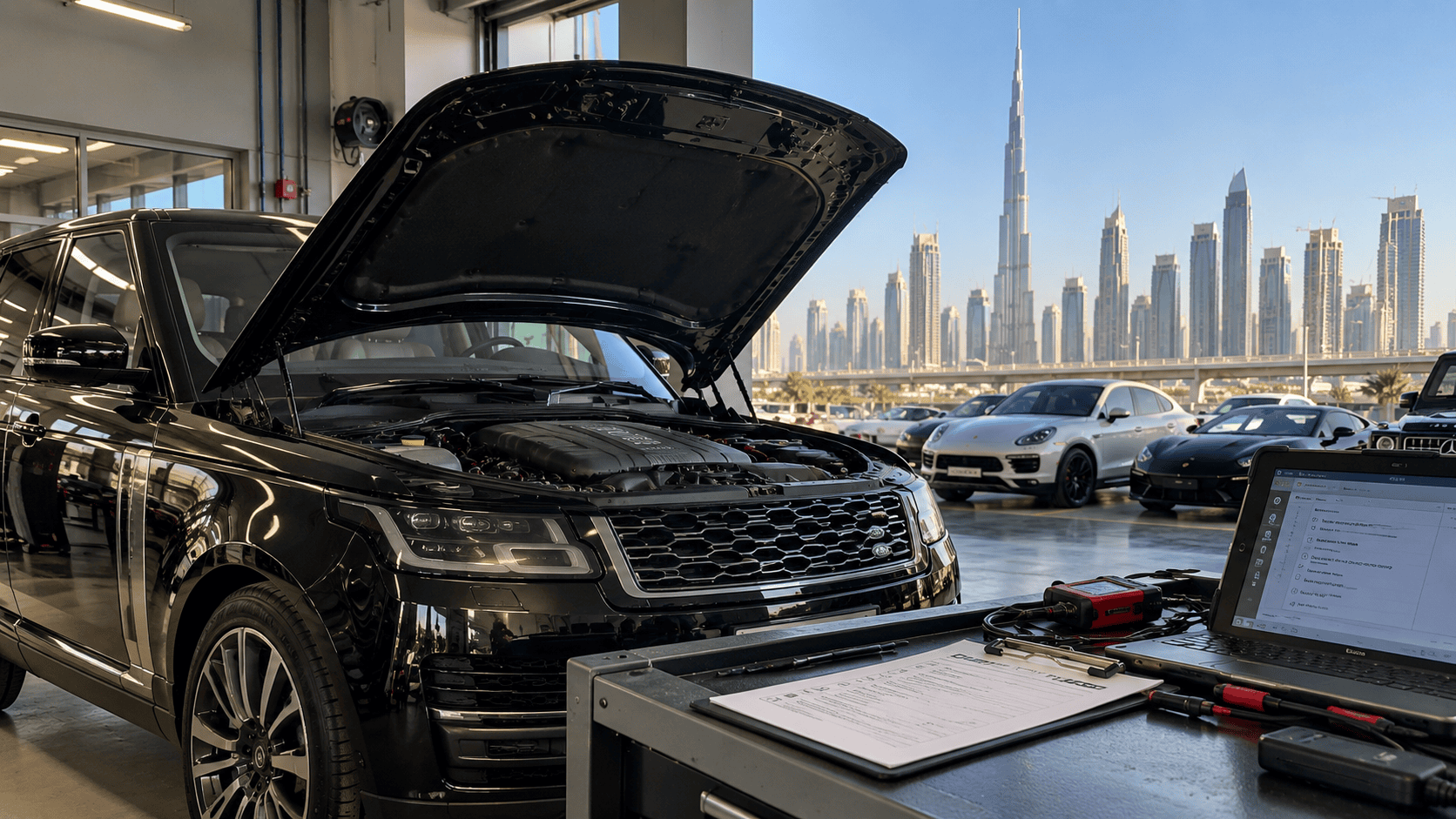
Dubai Used Cars: Inspection Checklist and What to Check Before Buying
Dubai used cars attract buyers from all over the world, and for good reason. The city offers a huge choice of well-kept vehicles, from everyday sedans to rare supercars, often with low mileage and full dealer history. But not every car on the market is as good as it looks. If you plan to buy used cars in Dubai, a proper inspection is the single best way to protect your money.
This guide gives you a complete used car inspection checklist for Dubai, with extra tips for the luxury segment, so you know exactly what to check before you pay.
Understanding the Dubai Used Car Market
The Dubai used car market is one of the most active in the region. It includes cars sold by dealerships, showrooms, private owners, and specialist buyers. You will find GCC-spec cars built for local conditions, as well as imported vehicles from the US, Europe, and Japan.
This variety is an advantage, but it also means condition and history vary widely. Heat, dust, humidity near the coast, and heavy city traffic all affect how a car ages. Two cars of the same model and year can be in very different shape, which is why checking each one matters more than trusting the listing.
Why Inspect Used Cars in Dubai Before Buying?
When you buy used cars in Dubai, the main risks are hidden accident damage, unpaid finance, tampered mileage, worn-out parts, and weak air conditioning. Summer temperatures put extra stress on batteries, tyres, rubber seals, cooling systems, and paintwork.
An inspection helps you:
- Avoid cars with hidden structural or flood damage
- Confirm the true condition and mileage
- Estimate upcoming repair and maintenance costs
- Negotiate a fair price using facts, not guesses
- Walk away from risky deals with confidence
Step 1: Check the Paperwork First
Before looking at the car, verify the documents. Problems here can block the sale entirely.
- Mulkiya (registration card): Confirm it is valid and that the owner’s name matches their Emirates ID.
- Chassis number (VIN): It must match the registration and any inspection report.
- Bank finance: If the car was financed, the loan must be cleared and a clearance letter provided before transfer.
- Traffic fines: Unpaid fines can block registration renewal and ownership transfer.
- Service history: Ask for full records, ideally from the authorised dealer.
- Warranty or service contract: Check whether it is still active and transferable.
Step 2: Confirm the Specification (GCC vs Imported)
Many second hand cars in Dubai are GCC-spec, while others are imported. Imported cars can be cheaper, but they may have different cooling systems, no regional warranty, and lower resale value. Always ask for the specification and verify it from the documents and the chassis details.
Step 3: Inspect the Exterior and Body
Walk around the car in good daylight and look closely at the following:
- Paint consistency: Different shades or textures between panels can mean repainting after an accident.
- Panel gaps: Uneven gaps between doors, bonnet, boot, and bumpers often signal structural repair.
- Overspray: Paint on window rubbers or trim suggests a respray.
- Sun damage: Look for faded paint, peeling clear coat, a cracked dashboard, and brittle plastic trim.
- Glass and lights: Check for chips, cracks, moisture inside headlights, and mismatched headlight brands.
- Underbody: Look for rust, leaks, and scrape marks, especially on cars used near the coast or off-road.
Step 4: Check Tyres, Brakes, and Suspension
- Check the tyre manufacturing date (the four-digit code on the sidewall). Heat ages tyres quickly, so tyres older than five or six years may need replacing even with good tread.
- Look for uneven wear, which can point to alignment or suspension problems.
- Inspect brake discs and pads for scoring or heavy wear.
- Press down on each corner of the car. It should settle quickly without bouncing.
- Listen for clunks or knocks over bumps during the test drive.
Step 5: Inspect the Engine and Mechanical Parts
Ask for the engine to be started cold, since some problems only show at start-up.
- Fluids: Check oil, coolant, brake fluid, and transmission fluid for level and colour.
- Leaks: Look under the car and around the engine bay for oil or coolant seepage.
- Battery: Dubai heat shortens battery life, so check its age and condition.
- Belts and hoses: Look for cracks, fraying, or bulging.
- Exhaust: Blue, white, or black smoke at start-up is a warning sign.
- Warning lights: All dashboard lights should come on at start-up and then switch off.
Step 6: Test the Air Conditioning and Interior
In Dubai, a weak air conditioner is a major issue and can be expensive to fix. Run the AC on maximum for at least ten minutes and make sure it stays cold.
- Test every button, window, seat adjustment, sunroof, infotainment screen, and camera.
- Check for stains, dampness, or musty smells that may point to water damage.
- Compare wear on the leather, stitching, and steering wheel with the stated mileage.
- Look under the floor mats and in the boot for water marks or rust.
Step 7: Look for Accident and Flood Damage
Signs of past accidents include re-sprayed seams, replaced airbags, mismatched bolts, and uneven door gaps. A professional inspection with a paint meter can reveal repainted panels you cannot see by eye. For flood damage, look for silt in hidden areas, corroded electrical connectors, fogged lights, and a persistent damp smell.
Step 8: Take a Proper Test Drive
Aim for 20 to 30 minutes covering city traffic and a faster road if possible.
- Does the car pull to one side or vibrate at speed?
- Are gear changes smooth, with no jerking or delay?
- Are the brakes firm and quiet?
- Does the steering feel precise?
- Are there any unusual noises from the engine, suspension, or gearbox?
Step 9: Get an Independent Professional Inspection
Even if you know cars, an independent inspection is worth the cost. In Dubai you can book a full inspection at an RTA-approved testing centre or a trusted inspection service. A good report covers the engine, gearbox, chassis, paint thickness, electronics, brakes, suspension, tyres, and a computer diagnostic scan.
Use the report to negotiate. If it shows problems, you can ask for a lower price, request repairs before purchase, or walk away.
Used Luxury Cars in Dubai: Extra Checks
Used luxury cars in Dubai need extra attention because parts and repairs cost far more. Always insist on a full dealer service history and an inspection by a specialist who knows the brand. Here is what to focus on by type:
- Supercars: Check clutch wear, track use, carbon-ceramic brake condition, and any underbody damage. If you are looking at a Lamborghini or Ferrari, pay close attention to service records, gearbox condition, and original paint.
- Performance and sports cars: A Porsche or McLaren may have been driven hard, so check tyres, suspension, and signs of track use. Review any Aston Martin or Maserati carefully for electronics, interior wear, and regular servicing.
- Ultra-luxury sedans and SUVs: For a Bentley, Rolls-Royce, or Maybach, air suspension, electronics, and comfort features are the key areas. Test every function.
- Luxury SUVs: A Land Rover should be checked for air suspension faults, off-road use, underbody damage, and electrical issues.
Red Flags When Buying Used Cars in Dubai
- The seller refuses an independent inspection.
- The documents do not match the car or the owner cannot be verified.
- Mileage looks too low for the age and condition of the car.
- The price is far below market value with no clear reason.
- You are pressured to pay a deposit immediately.
- Outstanding finance or fines are not disclosed.
Quick Checklist for Used Cars in Dubai
- Verify registration, VIN, finance clearance, and fines
- Review the full service history
- Inspect body, paint, glass, and panel gaps
- Check tyre age, brakes, and suspension
- Test the engine, gearbox, and all fluids
- Run the AC for at least ten minutes
- Test all electronics and interior features
- Look for accident and flood damage
- Complete a 20 to 30 minute test drive
- Get a professional inspection report
Selling Your Own Luxury Car in Dubai?
Knowing what buyers look for also helps you as a seller. A clean service history, clear documents, and a well-presented car bring a better price and a faster sale. If you own a premium or exotic vehicle, UAE Luxury Car Buyer offers quick valuations and hassle-free purchases across Dubai and the UAE.
Frequently Asked Questions About Dubai Used Cars
Is it safe to buy used cars in Dubai?
Yes, if you do your checks. Verify the documents, inspect the car, and get an independent report. Most problems can be spotted before you pay.
How much does a used car inspection cost in Dubai?
Cost depends on the centre and how detailed the report is. Basic checks cost less, while comprehensive inspections for luxury and performance cars cost more. It is small compared with the price of hidden repairs.
How long does an inspection take?
A full inspection usually takes one to two hours, depending on the vehicle and the centre.
What is the difference between GCC-spec and imported second hand cars in Dubai?
GCC-spec cars are built for regional conditions and usually carry regional warranty and better resale value. Imported cars can be cheaper but may lack local warranty and cooling upgrades.
Can I negotiate after an inspection?
Yes. If the report finds faults or upcoming maintenance, you can use it to ask for a lower price or for repairs before purchase.
Should I buy a used luxury car without service history?
It is risky. Missing history makes it hard to know if maintenance was done properly, so be ready to negotiate hard or walk away.
Final Thoughts
Dubai used cars offer excellent value when you choose carefully. Check the paperwork, inspect the car thoroughly, test everything, and back it up with an independent professional report. Whether you are shopping for a daily driver or comparing used luxury cars in Dubai, a proper inspection can save you thousands of dirhams and help you drive away with confidence.