
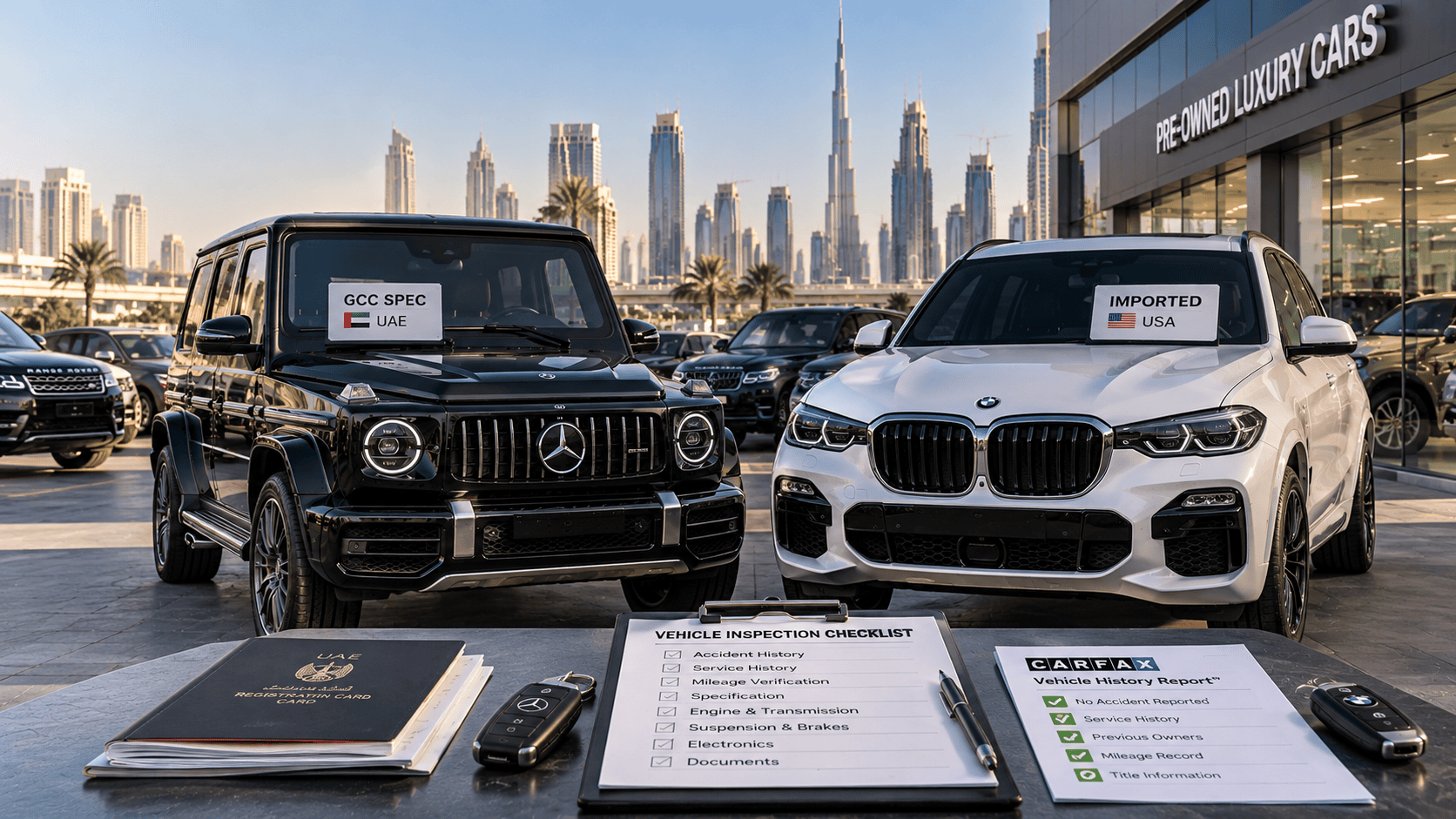
Second hand cars in Dubai come in two main types: GCC-spec cars built for the Gulf region, and imported cars brought in from the US, Canada, Europe, Japan or other markets. They can look identical in a showroom, but they can behave very differently once you own them. The price gap between the two is often what attracts buyers, yet it can also hide higher repair costs and lower resale value.
This guide explains the difference between GCC-spec and imported cars, how to tell which one you are looking at, and which is the better choice for your budget.
What Is a GCC-Spec Car?
A GCC-spec car is built or adjusted for the Gulf Cooperation Council countries, including the UAE. These cars are designed for hot weather, dust and long periods of heavy air conditioning use. They usually come with regional warranty, local dealer support and a documented service history within the UAE.
Because they match local conditions and regulations, GCC-spec cars are generally easier to register, insure, service and resell.
What Is an Imported Car?
An imported car is built for another market and shipped to the UAE, either new or used. In the second hand cars Dubai market, the most common imports come from the US, Canada, Japan and Europe. Some are in excellent condition and priced well below GCC-spec equivalents. Others are former auction or insurance vehicles that were repaired before sale.
Imported cars are not automatically bad, but they need more careful checking.
GCC vs Imported Cars: Key Differences
- Climate suitability: GCC-spec cars usually have stronger cooling and air conditioning systems for local heat. Imported cars may be built for milder climates and can struggle in Dubai summers.
- Warranty: GCC-spec cars may have regional manufacturer warranty or service contracts. Imported cars often lose or do not qualify for local warranty, so confirm this before you buy.
- Price: Imported cars are often cheaper to buy, which is the main reason people choose them.
- Resale value: GCC-spec cars usually hold their value better and sell faster when you resell.
- Parts and servicing: Parts for GCC-spec models are easier to find locally. Some imported specifications need parts ordered from abroad, which can add delay and cost.
- Features and units: Imported cars may show different dashboard units, lighting and equipment compared with local models.
- Accident history: Some imported cars come from auctions after accidents. Always check for repair history and structural damage.
- Insurance and registration: Imported cars may need extra checks, and some insurers price them differently. Confirm cover before paying.
How to Tell If a Car Is GCC-Spec or Imported
Do not rely on the seller’s word alone. Use these checks:
- Look at the registration card (Mulkiya) and compare it with the chassis number (VIN) on the car.
- Check the specification label on the door frame or under the bonnet, which shows the market the car was built for.
- Ask for the original dealer service record and check whether servicing was done in the UAE.
- Compare features and badges with the official GCC specification of that model and year.
- Get an independent inspection to confirm the specification and look for hidden repairs.
Our used car inspection checklist for Dubai covers each of these checks in detail.
Pros and Cons of GCC-Spec Second Hand Cars
Pros:
- Built for local heat and conditions
- Easier warranty, parts and service support
- Stronger resale value
- Simpler registration and insurance
Cons:
- Higher purchase price
- Fewer bargain deals
Pros and Cons of Imported Second Hand Cars
Pros:
- Often lower price for the same model and year
- Wider choice of rare or specific trims
- Can be a good deal when condition and history are verified
Cons:
- Possible lack of local warranty
- Higher risk of past accident or auction history
- Weaker resale value
- Parts may take longer and cost more
- May struggle with Dubai heat if not built for it
Which Should You Choose?
Choose a GCC-spec car if you want fewer surprises, easier servicing and the best resale value. It is usually the safer choice for a daily driver or a family car.
Choose an imported car only if the price difference is large, the history is clear, and a professional inspection confirms the condition. Plan for possible extra costs on parts and servicing, and expect a lower resale price later.
GCC vs Imported for Luxury and Exotic Cars
The gap matters even more with premium vehicles. Repairs, parts and specialist labour cost far more, and resale value depends heavily on specification and history. Buyers of used luxury cars in Dubai often prefer GCC-spec cars with full dealer records because they are easier to verify and sell later.
If you are considering a Lamborghini, Ferrari, Porsche or McLaren, confirm the specification, ownership history and service record before discussing price. The same applies to an Aston Martin or Maserati.
For ultra-luxury models such as a Bentley, Rolls-Royce or Maybach, and for a luxury SUV like a Land Rover, specification affects warranty, parts and value, so verify it carefully.
Tips Before You Buy Second Hand Cars in Dubai
- Ask the seller directly whether the car is GCC-spec or imported, and get it in writing.
- Check the chassis number against the registration and service records.
- Look for signs of accident repair, repainting and flood damage.
- Check whether any manufacturer warranty or service plan still applies in the UAE.
- Get insurance quotes before you commit to an imported car.
- Compare similar listings so you know whether the price gap is fair.
- Always get an independent inspection report.
Selling Your Second Hand Car in Dubai
The same rules apply when you sell. A GCC-spec car with a full service history and clear paperwork attracts better offers and sells faster. If you own a premium or exotic vehicle and want a quick valuation, UAE Luxury Car Buyer buys luxury cars across Dubai and the UAE.
Frequently Asked Questions
Is a GCC-spec car better than an imported car?
For most buyers, yes. GCC-spec cars are built for local conditions, easier to service and usually resell for more. Imported cars can still be a good deal when the history is clear and the price difference is meaningful.
Are imported second hand cars in Dubai cheaper?
Often they are, but the saving can disappear through higher repair costs, harder parts supply and lower resale value.
Do imported cars have warranty in the UAE?
Not always. Manufacturer warranty may not apply to cars built for other markets, so confirm with the brand’s UAE dealer before you buy.
How can I check if a car is GCC-spec?
Check the registration card, chassis number, specification label and service history, and confirm with an independent inspection.
Is it harder to resell an imported car?
Usually, yes. Many buyers prefer GCC-spec cars, so imported cars often take longer to sell and may fetch a lower price.
Final Thoughts
When shopping for second hand cars in Dubai, specification matters as much as mileage and price. GCC-spec cars offer easier ownership and stronger resale value, while imported cars can save money if you verify the history and accept the extra risk. Check the paperwork, confirm the specification, and get a professional inspection before you pay.